Feed
Get my plan →

Plantation, FL

Apr 5, 2026 · 8 zones analysed

Kitchen garden

Before & Concept

Concept is illustrative — not a build spec

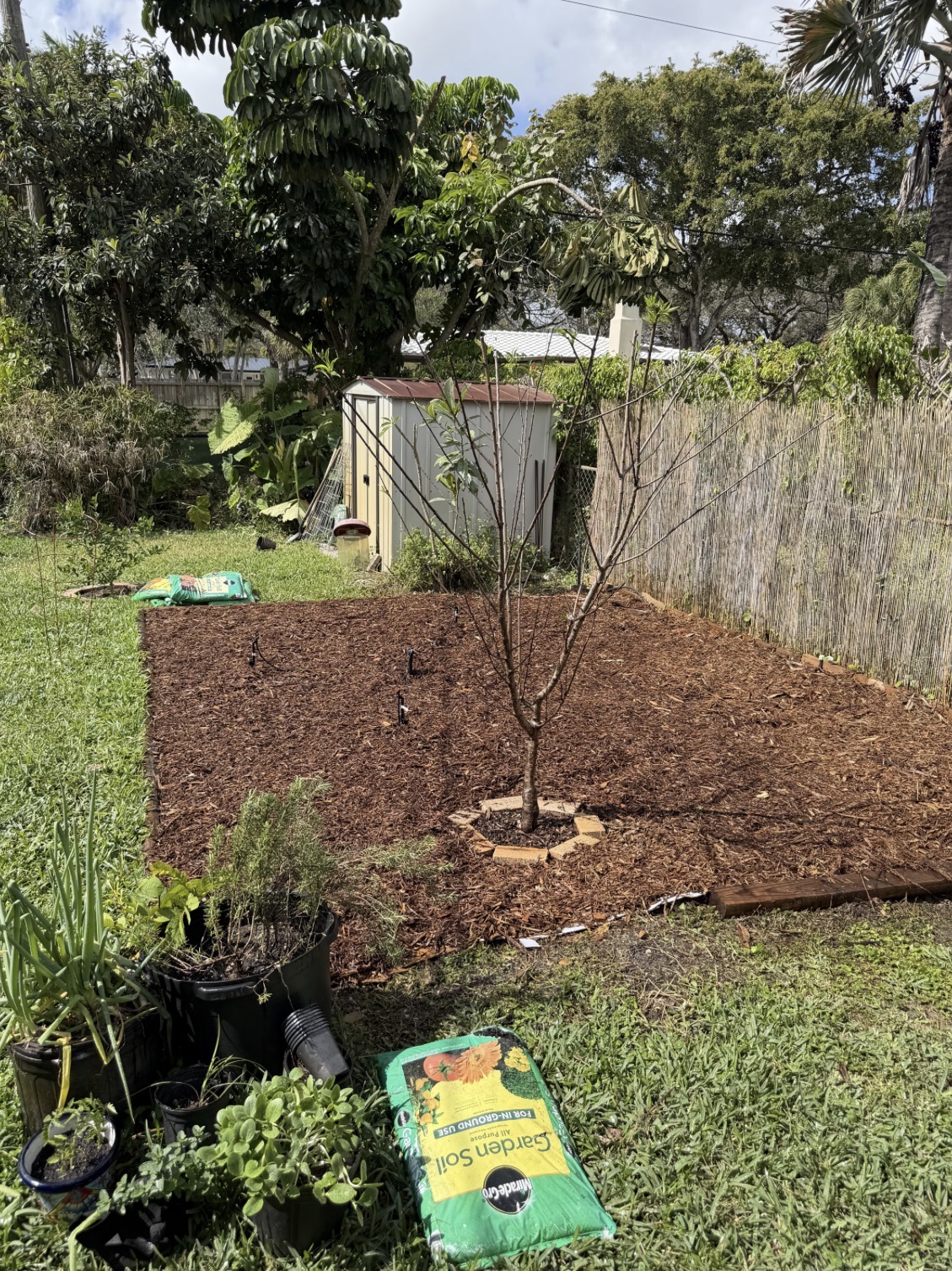
Before
Submitted photo
Yard before
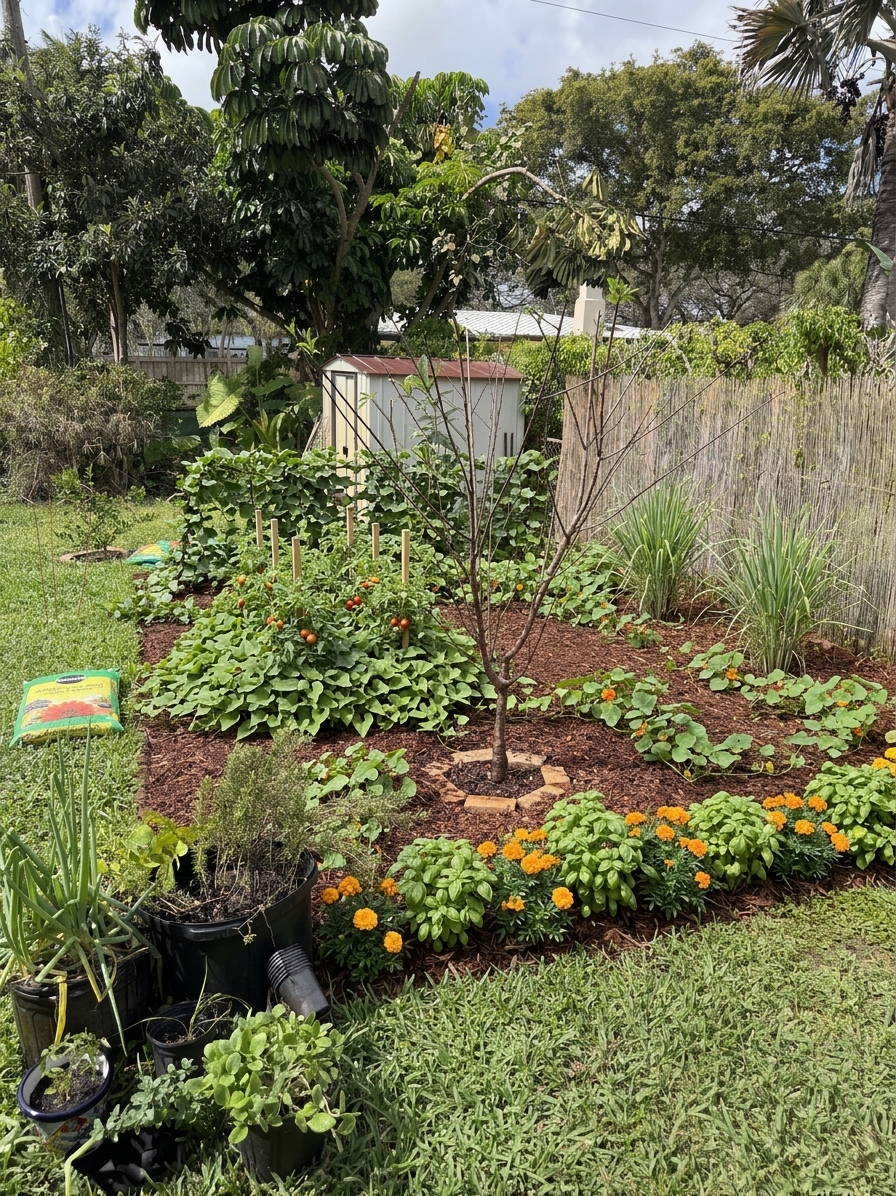
Concept
AI render
Concept render

Recommended Plants

6 plants

Genovese Basil

Front edge of mulched bed, alternating with marigolds

Repels whiteflies and aphids, essential kitchen herb, thrives in full sun South Florida conditions year-round with succession planting

Sunlight

Full sun (6+ hours daily)

Watering

Moderate; water at base only to prevent fungal disease in humidity

Soil

Rich, well-draining amended soil; pH 6.0–7.0

Maintenance

Pinch flower buds weekly to keep bushy and productive

Spacing

10–12 inches

Seasonal

Best October–April; succession plant every 6 weeks; bolts in peak summer

Tips

Companion with marigolds for best whitefly/aphid deterrence; watch for slugs after rain

African Marigold (Tagetes erecta)

Front edge of mulched bed alternating with basil, and scattered through bed interior

Root exudates repel Florida soil nematodes; blooms deter whiteflies and aphids; edible petals; fully heat-tolerant

Sunlight

Full sun

Watering

Low to moderate; drought-tolerant once established

Soil

Tolerates Florida sandy loam with light amendment

Maintenance

Deadhead spent blooms weekly to extend flowering

Spacing

12–18 inches

Seasonal

Plant year-round in Zone 10; most vigorous October–May

Tips

Virtually pest-free; avoid overwatering to prevent stem rot in rainy season

Cherry Tomato — 'Juliet' or 'Sweet 100'

Left-rear quadrant of mulched bed, behind and left of central tree

Highly productive South Florida kitchen staple; crack-resistant varieties handle humidity; companion basil and marigolds in same bed reduce pest pressure significantly

Sunlight

Full sun — minimum 8 hours for reliable fruit set

Watering

Consistent moderate moisture; drip or soaker hose preferred; avoid wetting foliage

Soil

Rich, well-draining, pH 6.0–6.8; amend with compost before planting

Maintenance

Prune suckers weekly; tie to 4-ft stakes as plants grow

Spacing

24–36 inches between plants

Seasonal

Plant September–February for main crop; expect harvest 60–75 days after transplant

Tips

Watch for hornworm, whiteflies, and early blight; apply copper fungicide preventively in wet season; basil and marigold companions reduce pressure

Malabar Spinach (Basella alba)

Base of reed fence along right side of bed, trained vertically

Only leafy green that thrives in South Florida summer heat and humidity; climbs reed fence maximizing vertical space; prolific harvest used exactly like spinach

Sunlight

Full to partial sun

Watering

Moderate to high; consistent moisture yields tender large leaves

Soil

Rich, moist, well-amended

Maintenance

Harvest outer leaves regularly; train vines with loose ties; prune woody stems

Spacing

18 inches between plants

Seasonal

Best April–October; grows year-round in Zone 10 but slower in cooler months

Tips

Very few pest issues — one of the most trouble-free crops in South Florida; watch for slugs in wet conditions

Lemongrass (Cymbopogon citratus)

Right side of bed between central tree and reed fence

Culinary staple for Southeast Asian and Caribbean cooking; natural mosquito and insect deterrent; architectural clumps frame the fruit tree and provide year-round structure

Sunlight

Full sun

Watering

Moderate; drought-tolerant once established

Soil

Well-draining; tolerates Florida sandy soil with light amendment

Maintenance

Harvest outer stalks by twisting at base; divide clumps every 2 years

Spacing

24–36 inches between clumps

Seasonal

Evergreen in Zone 10; harvest stalks year-round

Tips

Nearly pest-free; citral oils naturally deter many garden insects including mosquitoes

Nasturtium (Tropaeolum majus)

Open pockets throughout bed, front corners, and around base of central tree ring

Fully edible flowers and leaves (peppery flavor for salads); acts as aphid trap crop protecting tomatoes and basil; attracts beneficial predatory insects; low maintenance ground filler

Sunlight

Full sun to partial shade

Watering

Low to moderate; excess water and fertilizer produces leaves over blooms

Soil

Lean soil preferred — do not over-fertilize

Maintenance

Minimal; trim if sprawling too aggressively; remove aphid-laden stems when needed

Spacing

12 inches

Seasonal

Best October–April in South Florida; declines in peak summer heat; self-seeds readily

Tips

Intentionally allow aphids to colonize nasturtiums as a decoy trap crop, keeping pests off tomatoes and basil; remove heavily infested stems promptly

Full Plan

Cross-check with a local nursery

Get a plan for your yard

One photo is all it takes. Free consultation in minutes.

Start my consultation →