Feed
Get my plan →

plantation florida

Apr 5, 2026 · 7 zones analysed

Food forest

Before & Concept

Concept is illustrative — not a build spec

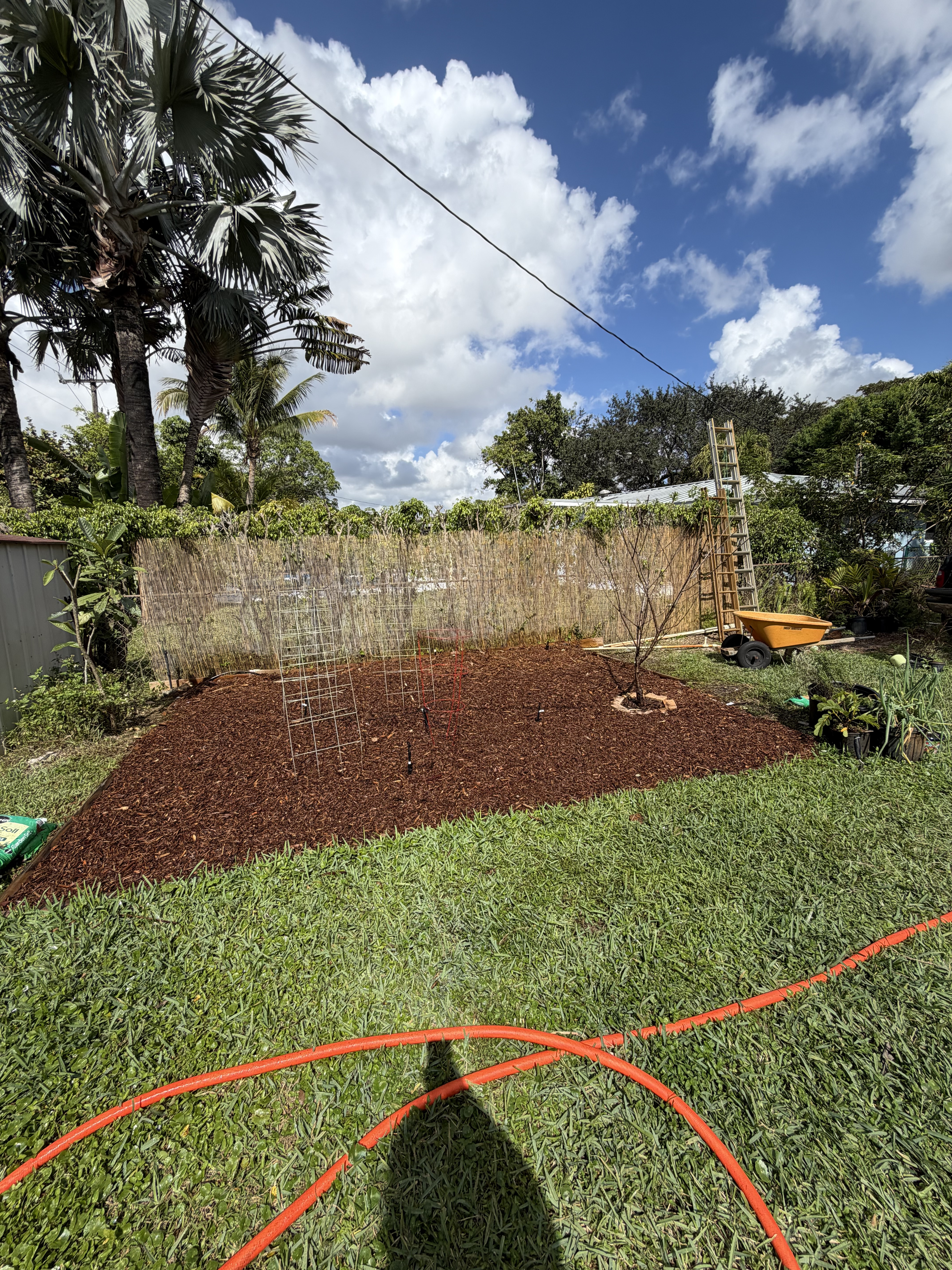
Before
Submitted photo
Yard before
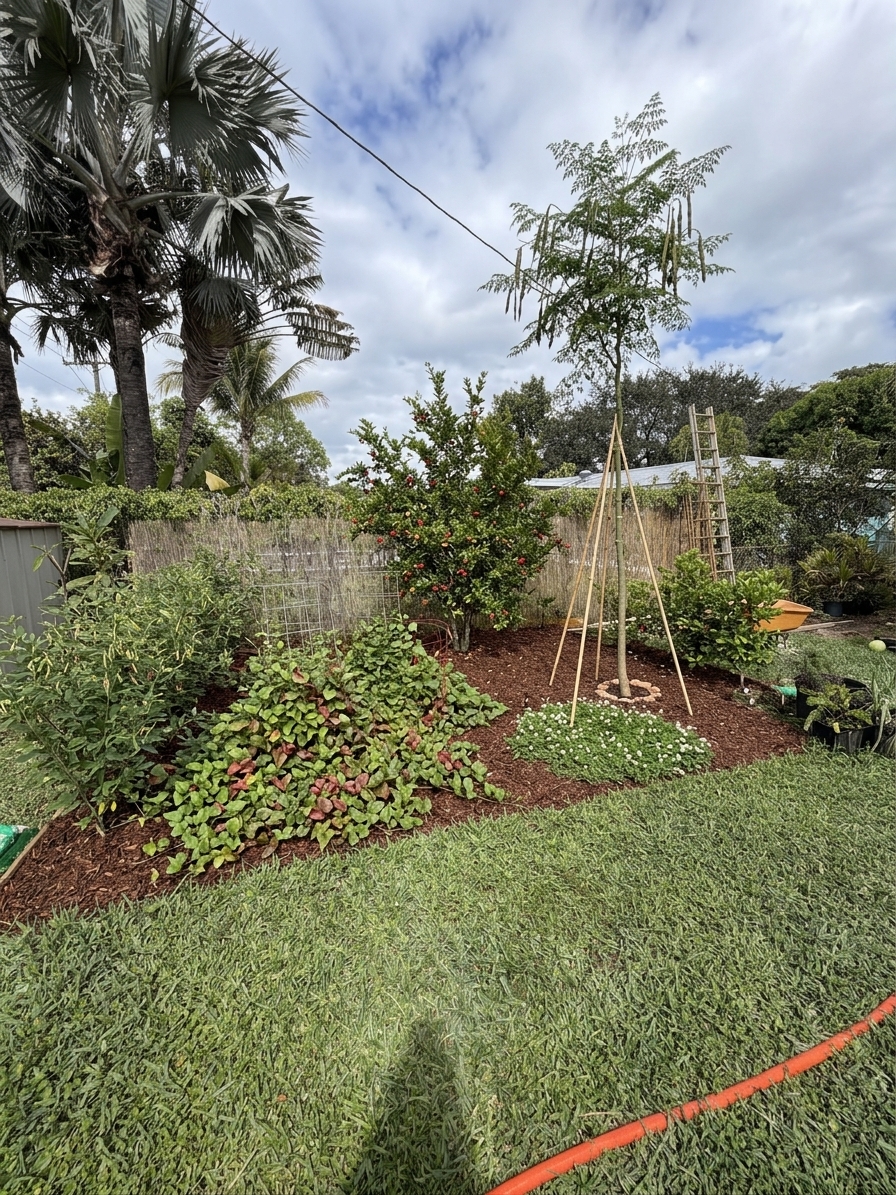
Concept
AI render
Concept render

Recommended Plants

6 plants

Moringa (Moringa oleifera)

Rear-right corner of mulched bed near fence

Fast canopy layer, nitrogen-rich leaf drop mulch, edible leaves and pods, thrives in Zone 10b

Sunlight

Full sun (6+ hours)

Watering

Low once established; drought-tolerant

Soil

Well-draining; tolerates poor sandy Florida soil

Maintenance

Coppice to 3 ft once or twice yearly for bushy edible regrowth

Spacing

10 ft radius at maturity; coppice to manage size

Seasonal

Dies back in rare frost but regrows from roots; protect young trees below 35°F

Tips

Nearly pest-free; hand-pick caterpillars on leaves

Acerola / Barbados Cherry (Malpighia emarginata)

Center-rear of mulched bed, left of existing transplanted tree

Mid-canopy fruiting shrub fruiting 2-3x per year in Zone 10b; extremely high vitamin C; pairs with Pigeon Pea nitrogen fixation

Sunlight

Full sun to light partial shade

Watering

Moderate; drought-tolerant once established

Soil

Slightly acidic, well-draining; amend with compost at planting

Maintenance

Light pruning after each fruiting cycle to shape and encourage branching

Spacing

8–10 ft from other large shrubs/trees

Seasonal

Fruits spring, summer, and fall; protect from hard frost

Tips

Watch for scale on stems; neem oil effective; net from birds if needed

Pigeon Pea (Cajanus cajan)

Left edge of mulched bed as a row parallel to left boundary

Nitrogen-fixing shrub row, edible protein-rich peas, chop-and-drop mulch source, windbreak for the bed

Sunlight

Full sun

Watering

Low; very drought-tolerant

Soil

Any well-draining soil including poor sandy Florida soil

Maintenance

Cut back to 2 ft after flowering to chop-and-drop mulch; regrows vigorously

Spacing

4 ft apart in a row

Seasonal

Flowers Nov–Feb in FL; harvest green peas before pods dry

Tips

Nearly pest-free; occasional aphids on new growth — blast off with water

Okinawa Spinach + Longevity Spinach (Gynura spp.)

Front-left quadrant of mulched bed around existing tomato cages

Edible perennial groundcover for part-shade under developing canopy; year-round harvest in Zone 10b; weed-suppressing living mulch

Sunlight

Part shade to full sun; tolerates light canopy shade

Watering

Moderate; wilts visibly when dry but recovers quickly

Soil

Rich, moist, well-draining; thrives in mulched bed

Maintenance

Harvest regularly; root cuttings prolifically from stem contact with soil

Spacing

18–24 in per plant; fills 3–4 ft radius within one season

Seasonal

Year-round in Zone 10b; slows slightly in coldest winter weeks

Tips

Extremely pest-resistant; occasional slugs — use iron phosphate bait if needed

White Dutch Clover (Trifolium repens)

Around existing transplanted tree mulch ring and open areas between plantings

Nitrogen-fixing living mulch; keeps soil cool and moist; feeds pollinators that service fruiting trees; reduces irrigation needs

Sunlight

Full sun to partial shade

Watering

Low to moderate

Soil

Adaptable; fixes nitrogen in any well-draining soil

Maintenance

Mow or cut to 6 in occasionally; reseeds itself

Spacing

Broadcast seed at 1 lb per 1,000 sq ft

Seasonal

May thin in peak FL summer heat; recovers strongly in fall

Tips

Attracts beneficial insects; generally pest-free

Miracle Fruit (Synsepalum dulcificum)

Right-rear of mulched bed in partial shade of future Moringa canopy

Rare understory specimen thriving in Zone 10b acidic FL soil; produces berries year-round once established; prefers dappled shade — ideal under developing food forest canopy

Sunlight

Partial shade; avoid harsh afternoon direct sun

Watering

Moderate and consistent; do not let dry out; use rainwater or acidified water

Soil

Acidic pH 4.5–5.5; amend with peat moss; avoid alkaline inputs

Maintenance

Minimal pruning; slow-growing 1–2 ft per year

Spacing

5–6 ft from neighboring plants

Seasonal

Fruits year-round in Zone 10b once established (3–4 years to first fruit)

Tips

Sensitive to alkaline water/fertilizer; use azalea/blueberry acid fertilizer; watch for scale insects

Full Plan

Cross-check with a local nursery

Get a plan for your yard

One photo is all it takes. Free consultation in minutes.

Start my consultation →